The tear-off is done, the dumpster is gone, and the new tile looks great from the driveway. Before you write the final check, someone should look at the parts you can't see.
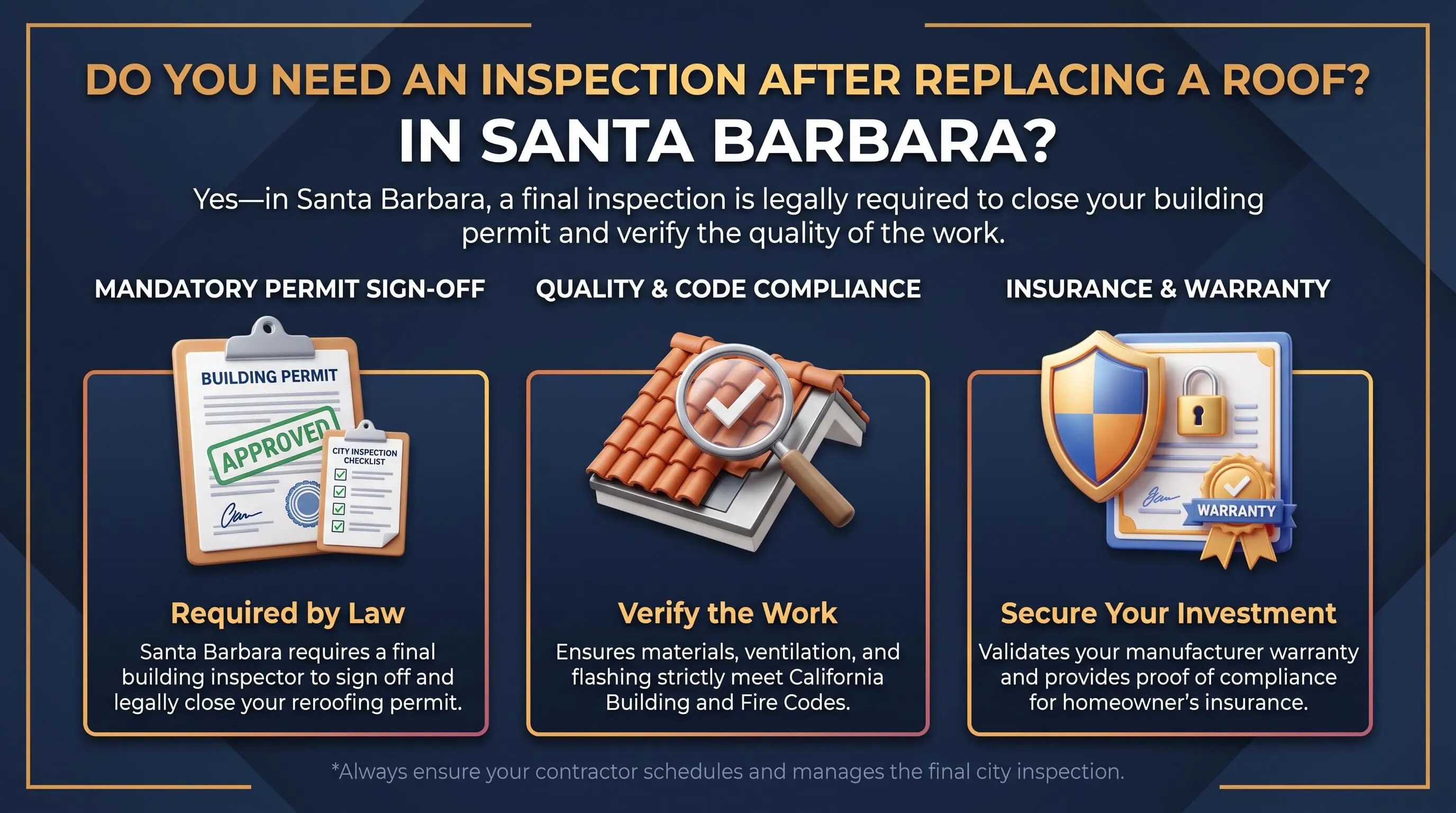
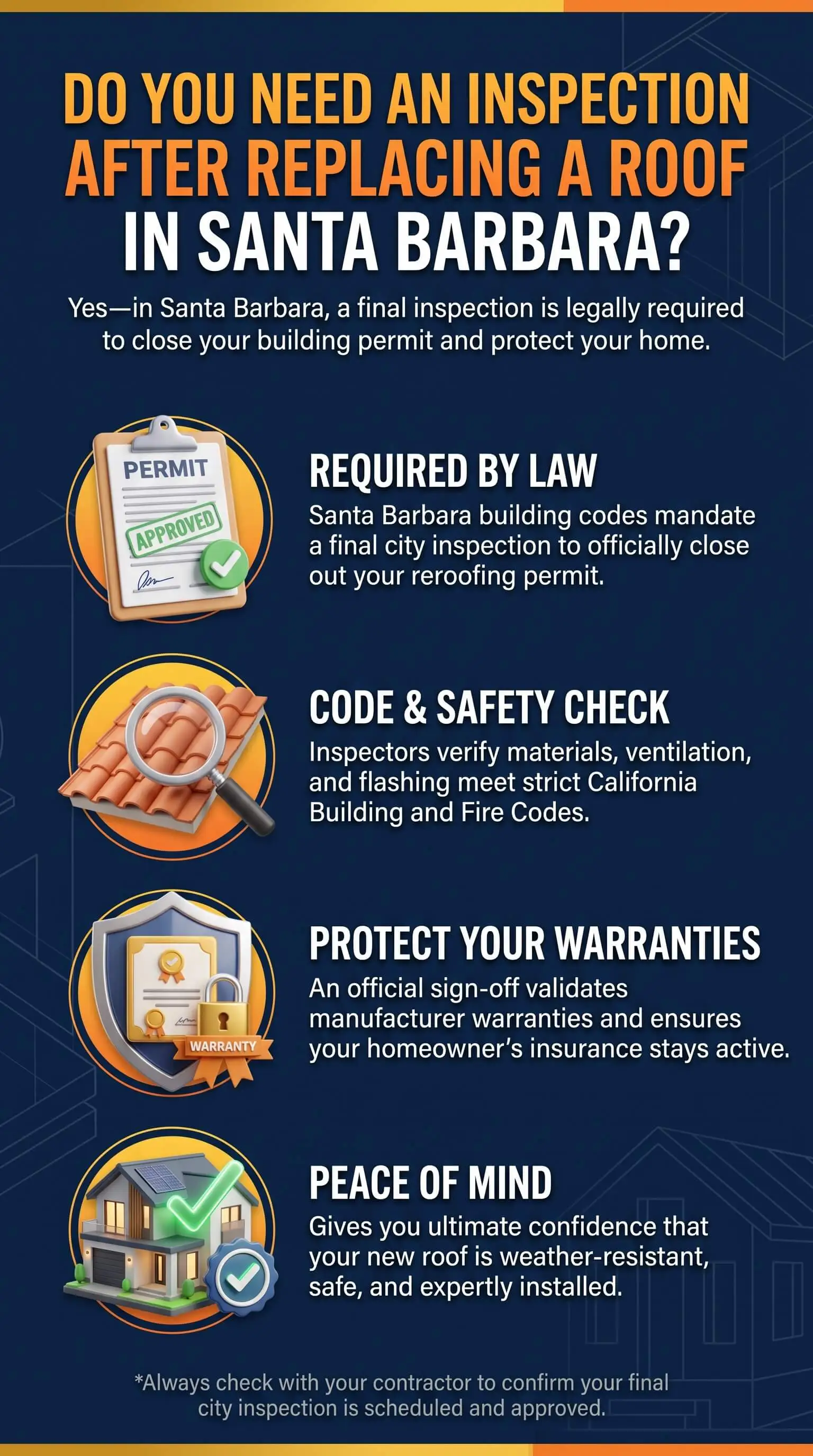
On most permitted roof replacement in Santa Barbara, that someone is a building inspector, who closes out the permit with a final inspection. Your roofer should walk the finished job with you too. An extra inspection you arrange yourself only makes sense in certain situations.
A new roof is a layered system. Decking, underlayment, flashing and vents all sit under the tile or shingles, and most of that work is covered up by the time the crew packs up. The inspection is your one chance to confirm it was done right.
TL;DR Quick Answers
Roof Replacement Santa Barbara
A roof replacement in Santa Barbara isn't finished until a building inspector finals the permit. Here's what to plan for.
Most residential replacements take three to five days, depending on the size of the home and the roofing material.
Asphalt shingles typically last 20 to 35 years. Clay tile and slate can last 50 years or more.
Local rules shape the job, including permits, fire-rated roofing in wildfire-risk areas, HOA approvals in neighborhoods like Montecito and Hope Ranch, and coastal or historic requirements.
The crew covers the flashing, underlayment and decking repairs before it leaves, so the final inspection is your one check on that hidden work.
Before final payment, ask your roofer for photos of the deck and flashing, and keep the permit card and warranty papers together.
Top Takeaways
A permitted reroof usually ends with a building department final and a walkthrough with your roofer.
Good inspections focus on flashing, vents, underlayment, decking and ventilation, since that's where leaks start.
Roof work can disturb flues, rooftop units, condensate lines and attic ducts, so have those checked.
Get an independent inspection if there was no permit, you're selling, you're in a fire zone or you spot a leak.
Keep the permit card, photos and warranties together.
What Does a Post-Replacement Roof Inspection Check?
It confirms the new roof went on to code and to the manufacturer's instructions. A good inspector spends most of the visit at the edges and openings, because that's where water finds its way in.
Flashing at walls, chimneys, skylights and valleys, lapped so water runs off instead of under.
New boots or flashing on vent stacks and flue collars. Reused parts are a red flag.
Underlayment and drip edge along the eaves and rakes, so water lands in the gutter and not behind the fascia.
Fastening, plus any decking that was replaced after the tear-off turned up soft or rotted wood.
Ridge and attic vents, open and unblocked.
Gutters, cleared out and reattached.
The yard and driveway, swept for stray nails.
Tile is everywhere in Santa Barbara, from Spanish-style homes downtown to the hillsides above Montecito. On a clay or concrete tile roof, the inspection should also confirm the tiles sit evenly and none were left cracked.
Who Performs the Inspection After a Roof Replacement?
Up to three people may look at your new roof, and each one is checking something different.
Your roofing contractor walks the finished job with you and takes care of punch-list items and cleanup.
A city or county building inspector checks code compliance on permitted work once the final inspection is requested.
An independent home or roof inspector gives you a neutral second opinion whenever you schedule one, which often happens before a sale.
Only the building inspector's sign-off closes the permit. The City of Santa Barbara's permit process ends with that final inspection. Goleta, Carpinteria and unincorporated parts of the county each follow their own rules, so ask your roofer which agency issued the permit and when the final is booked.
If you're still comparing contractors, pay attention to how each one handles the end of the job. A clear process for roof replacement in Santa Barbara lists the final inspection and cleanup as real steps, with the scope in writing before work begins.
Where Your Roof and HVAC System Meet
A roof replacement touches more of your heating and cooling system than most people expect. Every pipe and flue that comes through the roof gets lifted and reset, and some of those belong to your furnace or water heater.
After the job, check these spots:
Furnace and water heater flues, which need sealed collars and proper clearance.
Rooftop or attic units that may have been disconnected or bumped during tear-off.
Condensate lines, which can get crushed or lose their slope.
Attic ductwork, where one loose connection can dump conditioned air into the attic.
Ventilation matters as well. Blocked intake vents trap heat in the attic and make your air conditioner work harder through Santa Barbara's warm fall stretch.
If equipment sits on or under the roof, book an HVAC check soon after the roofers leave. Our guide to regular HVAC service and maintenance explains what a technician looks at, and this overview of the main components of an HVAC system shows which parts usually live in the attic.
When Should Santa Barbara Homeowners Ask for an Extra Inspection?
For a permitted job with a responsive contractor, the building final and your roofer's walkthrough usually cover it. Bring in an independent inspector when one of these applies to you.
No permit was pulled, so no code inspection ever happened.
You're buying or selling, and a buyer, lender or insurer wants paperwork.
Your home sits in a mapped fire hazard zone, and you want proof the roof carries the fire rating you paid for.
The manufacturer's warranty asks for registration or proof of a certified install.
A stain or drip shows up after the first heavy rain, even a small one.
Complex roofs deserve a closer look too. Tile, historic homes and roofs with lots of valleys and wall transitions have more flashing, and more places for it to go wrong.
Whichever route you take, keep the signed permit card, inspection results, photos and warranty papers in one folder. When you sell or file a claim, that folder does a lot of the talking for you.
"We've been replacing roofs in Santa Barbara since 1996, and the leaks people call us about years later almost never start in the middle of the roof. They start at a chimney, a skylight, or a flue somebody reused instead of re-flashing. So before the final payment, walk the job with your roofer and ask for photos of the deck and flashing before they are covered. A contractor who did it right will be glad to show you. Then make sure the permit was actually finaled, not just issued. That signature matters when you sell."
7 Essential Resources
We'd point any Santa Barbara homeowner to these before, during and after a reroof.
City of Santa Barbara Building Inspections shows how to request an inspection on a city permit and the permit number format you'll need.
The City of Santa Barbara Building Permit Application Guide explains when you need a permit and how a project moves from application to final.
CSLB Check a Contractor License lets you confirm a roofer's license status, bond and complaint history before you sign anything.
NRCA Consumer Information covers how to pick a roofing contractor, what warranties actually promise and basic upkeep.
CAL FIRE's Fire Hazard Severity Zones page lets you look up your parcel's hazard rating, which can affect building rules and real estate disclosures.
Ready for Wildfire: Hardening Your Home is CAL FIRE's checklist for roofs, vents, gutters and eaves.
ENERGY STAR Duct Sealing explains how leaky attic ducts waste the air you pay to heat and cool.
3 Statistics
A new asphalt shingle roof recoups about 68% of its cost at resale nationally, with an average resale value of $21,501, according to the 2025 Cost vs Value Report. Expect buyers to ask whether the permit was finaled.
Wind-blown embers can ignite homes up to a mile from a fire, according to CAL FIRE's Ready for Wildfire program, which calls the roof the most vulnerable part of a house. In Santa Barbara, that puts ember sealing at the eaves and ridge on every post-replacement checklist.
About 20 to 30% of the air moving through a typical home's ducts is lost to leaks, holes and poor connections, per ENERGY STAR. After days of crew work overhead, it's worth confirming the attic ducts are still connected.
Final Thoughts and Opinion
On a permitted roof replacement in Santa Barbara, the final inspection belongs to the job itself. It's the one point where someone outside the crew confirms the hidden work was done right.
Trouble usually starts when a homeowner treats the job as finished the day the dumpster leaves. A roof is done when the permit is finaled, the flashing and vents have been checked, and the paperwork is in your hands. And if something about the job still bugs you, pay for an independent inspection or have a top HVAC technician check any roof-connected equipment. It costs far less than a slow leak you discover two winters from now.
Frequently Asked Questions
Is a permit and final inspection required for a roof replacement in Santa Barbara? In most cases, yes. A full roof replacement in Santa Barbara usually needs a building permit, and that permit closes with a final inspection. The City of Santa Barbara, unincorporated county areas, Goleta and Carpinteria each set their own rules, so check with the agency that issued your permit.
What does a final roof inspection look for? The inspector confirms the roof meets code and the manufacturer's installation requirements. Expect them to check flashing at walls and penetrations, vent and flue collars, underlayment, drip edge, fastening and ventilation, plus fire rating where it's required.
How soon after a roof replacement should I have it inspected? Your roofer usually schedules the building final once the work is complete. For an independent inspection, aim for before final payment, or right after the first heavy rain so you know there are no leaks.
Does a new roof affect my HVAC vents or attic ductwork? It can. Crews reset furnace and water heater flues, work around rooftop or attic units, and sometimes move through the attic. If any equipment sits on or under the roof, have a professional for HVAC installation check the flues, condensate lines and duct connections.
What if my roofer did not pull a permit? Then no code inspection happened, which can cause trouble at resale or with your insurer. Call your local building department about permitting the work after the fact, and think about an independent inspection to document the roof's condition.
Do I need an inspection to keep my roof warranty valid? Some manufacturer warranties require registration, a certified installer or proof of installation. Some workmanship warranties also depend on a final permit. Read both, and keep the inspection paperwork with them.
Protect the Roof You Just Paid For
Before you call the job finished, check that the permit is finaled and ask your roofer for photos of the deck and flashing. Then file the warranty paperwork somewhere you'll find it in ten years. Have questions about a recent or upcoming roof replacement? Call a licensed Santa Barbara roofing contractor who'll walk the finished roof with you and give you straight answers.